
FROM THE KITCHEN
Do Galettes Contain Wheat? The Clear Answer
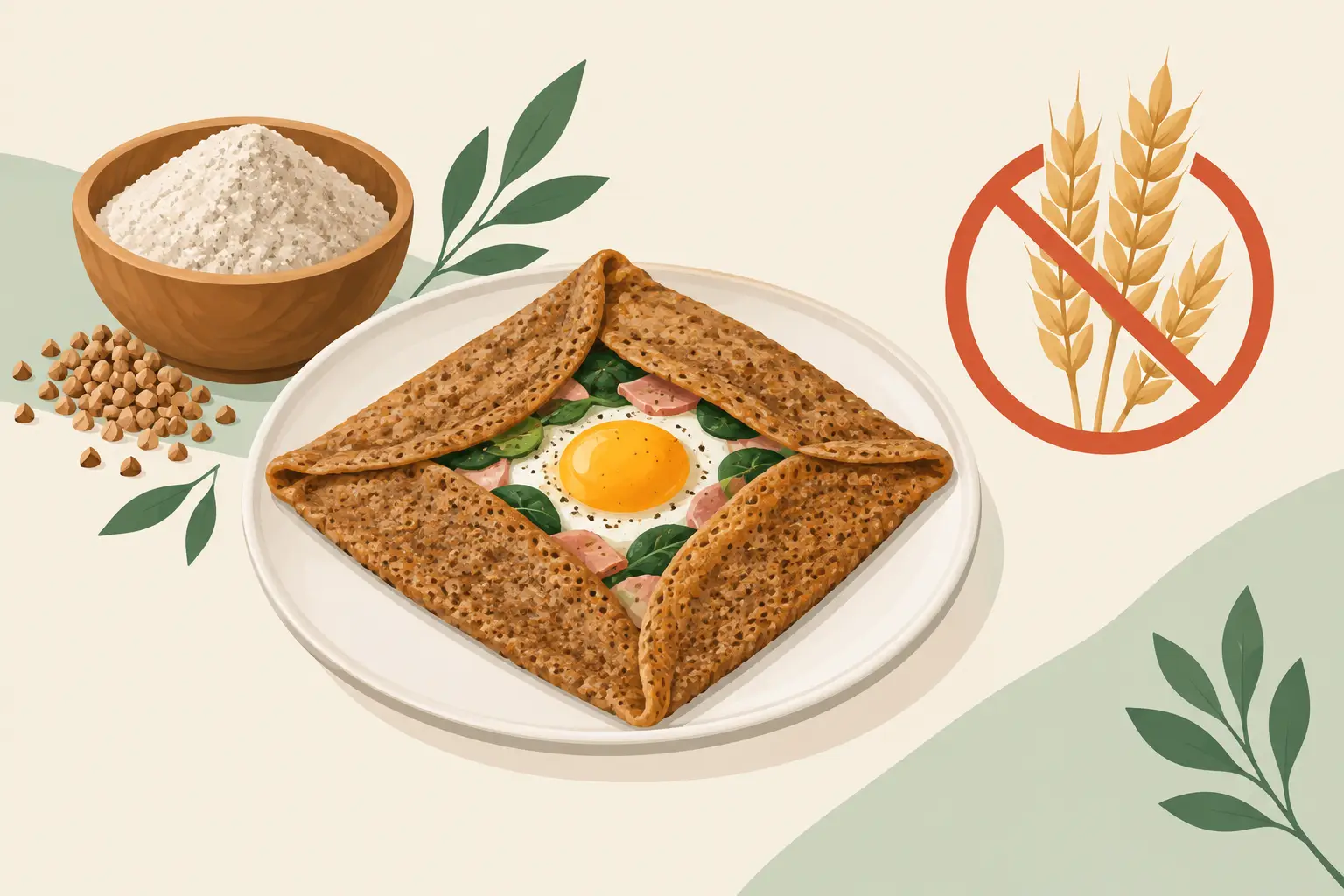
A Breton galette arriving at the table with a golden, lacy edge, warm filling, and a little folded square shape may look like a crêpe. But if you are asking, do galettes contain wheat, the answer is not always as simple as it seems. Some do, some do not, and the distinction matters greatly for anyone avoiding gluten.
In traditional French cooking, the word galette describes more than one thing. It can mean a rustic tart, a biscuit, a potato cake, or the savoury crêpe of Brittany. For diners seeking a gluten-free French meal, it is the Breton-style savoury galette that deserves attention - especially when it is made properly with buckwheat flour.
Do Galettes Contain Wheat? It Depends on the Galette
A classic Breton savoury galette is traditionally made from buckwheat flour, water, and salt. Buckwheat is not wheat, despite its name. It is a naturally gluten-free seed related more closely to rhubarb and sorrel than to cereal grains.
When a galette batter contains only buckwheat flour, water, and salt, it contains no wheat. Its flavour is pleasantly earthy and nutty, with a crisp edge that works beautifully with fillings such as ham, eggs, cheese, mushrooms, smoked salmon, or seasonal vegetables.
However, not every restaurant or packaged product uses that traditional recipe. Some cooks add wheat flour to buckwheat batter to make it easier to spread, soften the flavour, or create a more flexible texture. Others use a flour blend that may include wheat. A galette can also be served with fillings, sauces, or side dishes that introduce wheat even when the base itself is buckwheat.
That is why the reliable answer is: a traditional buckwheat galette should not contain wheat, but you should always confirm the recipe and preparation practices where you are dining.
Buckwheat Is Not the Same as Wheat
The name is understandably confusing. Buckwheat has been used for centuries in Brittany, where its dark-grey flour became the foundation for savoury crêpes known as galettes de sarrasin. Wheat flour, meanwhile, is generally used for the pale, delicate sweet crêpes many diners know best.
The two batters create very different results. A wheat crêpe is tender, light, and gently sweet or neutral depending on the recipe. A buckwheat galette has more character: a toasted aroma, a pleasantly rustic texture, and enough structure to hold a generous savoury filling.
For guests with celiac disease or gluten sensitivity, buckwheat can be an excellent choice because it is naturally free from gluten. Still, naturally gluten-free does not automatically mean safe for every person. The ingredients, griddle, utensils, and kitchen procedures all matter.
Why Some Galettes Still May Not Be Gluten-Free
A galette made with buckwheat can pick up wheat through cross-contact during preparation. This is especially possible in kitchens where sweet wheat crêpes and savoury buckwheat galettes share the same cooking surface, spreaders, spatulas, or prep area.
There is also the question of fillings. The galette itself may be wheat-free while a sauce is thickened with flour, a sausage contains breadcrumbs, or a garnish includes a wheat-based component. A filled galette is a complete dish, so the suitability of the final plate matters more than the flour in the batter alone.
If you have celiac disease, let the restaurant know clearly when ordering. Ask whether the batter is made entirely with buckwheat, whether wheat flour is added, and how the kitchen manages shared equipment. A knowledgeable restaurant should be able to explain the ingredients plainly rather than offering vague reassurance.
For someone avoiding wheat by preference rather than medical necessity, a traditional buckwheat galette may be a straightforward and satisfying choice. For those with a diagnosed allergy or celiac disease, the right decision depends on your own needs and the restaurant’s ability to accommodate them safely.
What to Ask Before Ordering a Buckwheat Galette
The best questions are short and specific. Start by asking whether the savoury galette batter contains only buckwheat flour, water, and salt, or whether it includes wheat flour. Then ask whether it is prepared on a separate surface from wheat crêpes.
It is also worth asking about the particular filling you want. Ham, cheese, eggs, vegetables, and meats can all be suitable, but sauces and prepared ingredients vary from kitchen to kitchen. If your dietary requirement is strict, mention it before the order is placed so the team can guide you toward the most appropriate choice.
You do not need to know every detail of French culinary vocabulary to order well. A simple request such as, “Is your buckwheat galette entirely wheat-free, and can it be prepared for celiac needs?” opens the right conversation.
Watch for the Word “Galette” Beyond Brittany
Not every French item called a galette is a buckwheat crêpe. A galette des rois, the festive cake served around Epiphany, is usually made with puff pastry and therefore contains wheat. A galette-style fruit tart is commonly made with a wheat-flour pastry dough. Some cookies and crispbreads also use the word galette without having any connection to Breton buckwheat cooking.
Context is everything. On a French bistro menu, a savoury galette filled with eggs, cheese, vegetables, or charcuterie is likely referring to the Breton style. In a bakery case, a galette may be a pastry and very likely contain wheat.
The Breton Tradition Is Deliciously Practical
Buckwheat galettes are not a compromise dish for diners avoiding gluten. They are a beloved regional specialty with their own culinary identity. In Brittany, they are part of everyday eating: simple enough for lunch, generous enough for dinner, and endlessly adaptable to what is in season.
A well-made galette should have contrast. The outer edge becomes lightly crisp on the hot griddle, while the centre remains supple enough to fold around the filling. A soft egg yolk, melting cheese, sautéed mushrooms, or tender ham finds a natural partner in buckwheat’s savoury depth.
This is why the best gluten-free option often feels like no special accommodation at all. The dish is traditional first, delicious second to none, and naturally suited to many diners who need to avoid wheat.
At Paris Crêpes Café, every savoury crêpe is a Breton-style buckwheat galette, bringing this classic French tradition to the table in downtown Niagara Falls. Guests with dietary requirements should still speak with the team when booking or ordering, particularly where celiac-safe preparation is needed, but the buckwheat base makes a memorable French meal more accessible from the first bite.
Choosing Between a Galette and a Sweet Crêpe
If wheat avoidance is part of your dining plan, remember that sweet crêpes are usually different from savoury galettes. Traditional sweet crêpe batter is commonly made with wheat flour. That does not make it less French or less delicious, of course, but it does mean that the two should not be treated as interchangeable.
For brunch, a buckwheat galette with eggs and a savoury filling can be a satisfying alternative to toast or pastry. At dinner, it offers the relaxed pleasure of French comfort food without the heaviness of a large entrée. The choice becomes even better when the kitchen understands that gluten-free dining is about clear information and careful handling, not simply swapping one flour for another.
The next time you see a galette on a menu, enjoy the promise behind it: perhaps a true Breton buckwheat crêpe, hot from the griddle and ready for a glass of cider or wine. Just ask the right question first, then settle in for a taste of France that can be both traditional and thoughtfully suited to your table.