
FROM THE KITCHEN
French Galette vs Crepe: Know Your Crêpes
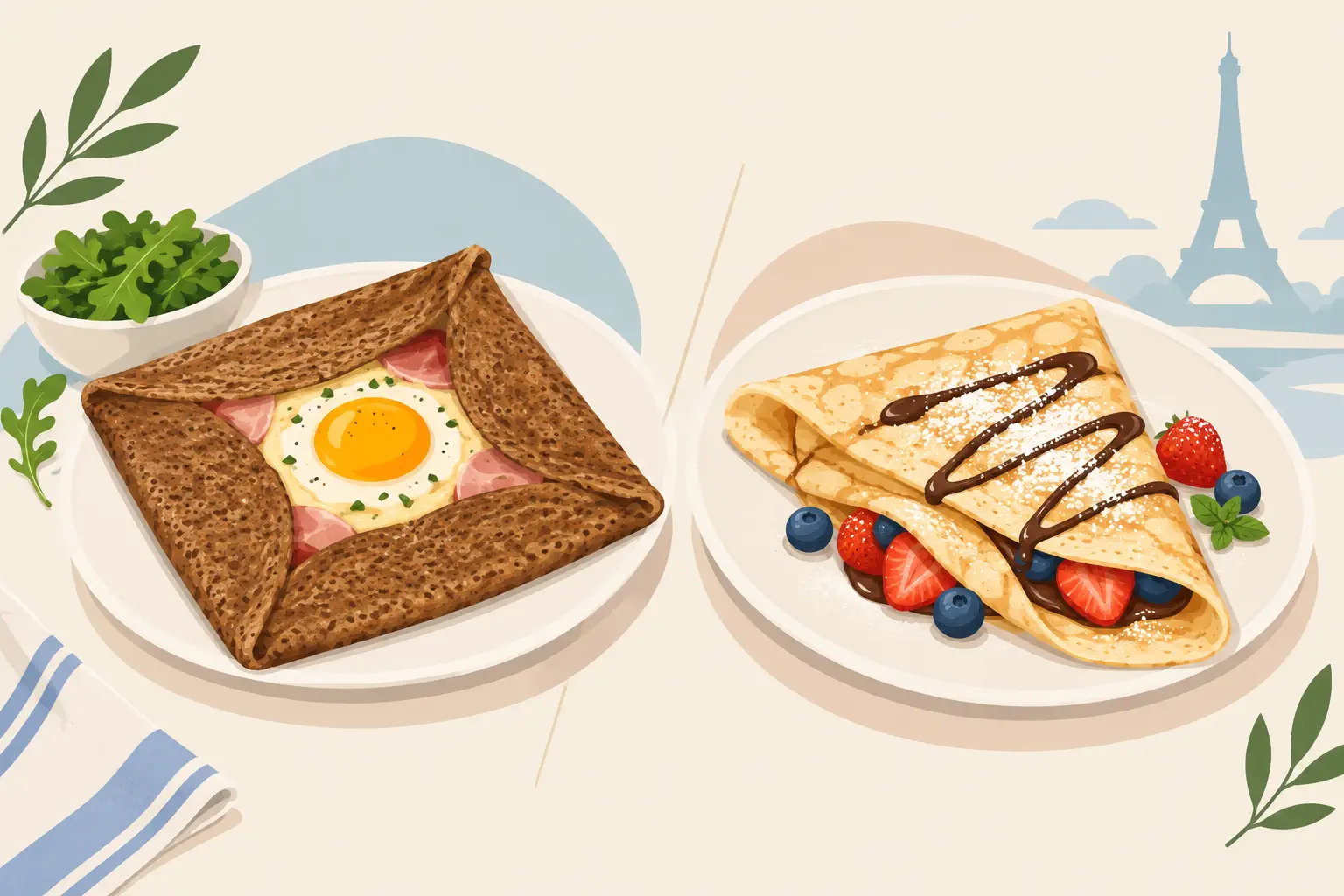
A ham-and-cheese crêpe may look simple on the plate, but in France, its batter tells a much bigger story. The French galette vs crepe question is not merely about savoury versus sweet. It is a delicious distinction rooted in regional tradition, grain, texture, and the kind of meal you want to enjoy.
At a French crêperie, both belong at the table. One makes a satisfying brunch or lunch, folded around ingredients such as egg, cheese, mushrooms, or smoked salmon. The other arrives warm and delicate, ready for butter, fruit, chocolate, caramel, or a classic finishing dusting of sugar. Knowing the difference makes ordering easier, but it also gives you a taste of the culture behind these much-loved French favourites.
French Galette vs Crepe: The Essential Difference
The clearest difference is the flour. A traditional Breton galette is made with buckwheat flour, water, and salt. Despite its name, buckwheat is not wheat at all. It is a naturally gluten-free seed with an earthy, lightly toasted flavour and a darker grey-brown colour once cooked.
A French sweet crepe is generally made from wheat flour, eggs, milk, butter, and a touch of sugar. Its batter is pale, smooth, and gently rich. On the hot crêpe plate, it cooks into a thin, tender round with softly crisp edges and a subtle buttery aroma.
That difference in batter changes everything. A galette has character and savoury depth. A crepe is more delicate, neutral, and lightly sweet, making it the natural partner for dessert fillings. Both are thin, both are made to order, and both can be folded into an inviting parcel. Yet they are not interchangeable.
The Breton Roots of the Galette
Galettes come from Brittany, or Bretagne, on France's northwest coast. The region's cool, wet climate suited buckwheat far better than wheat for many centuries, so local cooks turned the humble grain into an everyday staple. It was filling, practical, and full of flavour - the kind of food that could carry a farmer through a long day.
Today, the Breton galette is celebrated well beyond Brittany. It remains a familiar, generous meal: a crisp-edged buckwheat round with a warm filling at its centre. The classic galette complète combines ham, cheese, and egg, often with the yolk still golden and soft. Cut into it and the yolk becomes its own simple sauce.
Traditionally, galettes are often paired with dry cider served in a small bowl-like cup called a bolée. There is no need to be rigid about tradition, though. A glass of wine, a cold beer, or a sparkling beverage can suit the occasion just as well, depending on the filling and the company.
Why Buckwheat Matters
Buckwheat brings more than dietary flexibility. Its flavour is nutty, mineral, and slightly rustic, which gives savoury ingredients something substantial to rest against. A rich cheese, a runny egg, roasted vegetables, or smoky bacon can feel balanced rather than heavy because the galette has its own savoury voice.
It also creates a different texture. Properly cooked, a galette is pliable through the centre and pleasantly crisp at the edges. The batter is less elastic than wheat-based crepe batter, so it needs a confident hand on the griddle. That contrast - tender, crisp, warm, and earthy - is part of what makes a good galette memorable.
For gluten-free diners, a buckwheat galette can be a welcome way to enjoy a classic French meal without feeling limited to an afterthought. Buckwheat itself is naturally gluten-free, though anyone with celiac disease or a serious allergy should always share their needs with the restaurant so the kitchen can guide them appropriately.
Sweet Crepes Are Their Own Occasion
If a galette is lunch, brunch, or a relaxed light dinner, a sweet crepe is the graceful final course. The wheat-based batter gives it a soft, almost lace-like texture that works beautifully with fillings ranging from the simplest to the most indulgent.
Butter and sugar remain one of France's most satisfying combinations, especially when the crepe is served hot. Lemon and sugar bring brightness. Chocolate and banana offer familiar comfort. Berries, whipped cream, or a warm fruit compote can make dessert feel celebratory without becoming overly complicated.
Then there is the pleasure of the crepe itself. Because the batter is lightly sweet and buttery, it does not compete with the filling. It frames it. A well-made crepe should be thin enough to fold easily, yet strong enough to hold a spoonful of sauce or a generous layer of chocolate without tearing.
Can a Crepe Be Savoury?
Yes, especially outside France, where menus often use the word "crepe" for both sweet and savoury dishes. A wheat-flour crepe filled with chicken, cheese, spinach, or vegetables can be delicious. But in traditional Breton cooking, a savoury buckwheat galette and a sweet wheat crepe are distinct preparations.
The distinction is worth keeping because the flavours work differently. A savoury filling inside a sweetened, buttery crepe may taste softer and richer. The same filling inside a buckwheat galette gains contrast, toastiness, and structure. Neither choice is wrong; it depends on whether you want a lighter, more familiar wrapper or the unmistakable taste of Brittany.
How to Choose at Brunch, Lunch, or Dinner
Start with your appetite. If you want a complete plate with protein, vegetables, cheese, or an egg, choose a galette. It has the savoury backbone to make a meal of it, whether you are meeting friends for brunch on Queen Street or sitting down before an evening show.
If you have already enjoyed eggs, a baguette, or a bistro dish and want something sweet to share, choose a crepe. It is a lovely finish with coffee, tea, or a dessert wine. Couples often find one sweet crepe is the perfect excuse to linger a little longer at the table.
There is also no rule saying you must choose only one. In Brittany, it is entirely natural to begin with a galette and follow it with a sweet crepe. The progression makes sense: savoury buckwheat first, then a fine wheat crepe for dessert. It is a complete crêperie meal, unhurried and generously French.
What Makes a Great Galette or Crepe
The ingredients matter, but technique is just as important. The griddle needs to be hot enough to set the batter quickly, creating the delicate surface and lightly crisp edge that define both preparations. The batter must be spread thinly and evenly, then filled at the right moment so cheese melts, eggs cook to preference, and fresh ingredients stay lively.
A great galette should not be dry or brittle. A great crepe should not be thick, cakey, or overly sweet. Both should arrive warm, with the filling in proportion to the batter. Too much filling overwhelms the crêpe; too little turns a generous French classic into a snack.
At Paris Crêpes Café, savoury crêpes are Breton-style buckwheat galettes, offering gluten-free diners a true French option rather than a compromise. That makes it easy to come for an omelette or eggs Benedict at brunch, enjoy a galette for lunch, then return another evening for bistro classics and dessert.
A Small French Lesson With a Big Payoff
The next time you see both on a menu, remember the simple cue: galette for savoury buckwheat, crepe for sweet wheat. From there, let your appetite decide. Choose a warm galette when you want something comforting and complete; save room for a sweet crepe when the evening calls for one more taste of Paris.